Estero Dumpster Guide
Hurricane Season Cleanup: Handling Storm Debris in Estero
Storm cleanup in Southwest Florida is a seasonal certainty, not a rare event. Between the summer wet season and the hurricane months, Estero yards take on branches, fallen palms, and sometimes structural debris that curbside pickup cannot handle. Knowing how to sort it and when a roll-off makes sense saves time when the cleanup rush hits. Here is the local rundown.
The Season You Are Working Against
Estero's weather concentrates debris into a few months. NOAA's 1991–2020 normals for Fort Myers – Page Field show the area averages 57.41 inches of rain a year, with roughly two-thirds falling June through September — August alone normals at 10.43 inches. Those same months carry the wind risk. The result is a tight window where routine landscaping stress and storm damage overlap, and the mature tree and palm canopy in communities like Grandezza, The Brooks, and Miromar Lakes produces real volume when a storm moves through.
Ian Showed the Scale
The region's exposure is not theoretical. Hurricane Ian made a direct hit on this coast on September 28, 2022. In the months after, Lee County collected millions of cubic yards of debris — more than a million cubic yards of yard waste alone — and reopened the Gulf Coast Landfill off State Road 82 specifically to handle the construction and demolition load. A single major storm can generate years' worth of debris in a few weeks, which is why having a plan before the season matters.
Separate the Debris as You Go
The most important cleanup habit is sorting debris into streams while you load, because Lee County processes them separately. Keep three piles:
First, vegetative debris — branches, palm fronds, limbs, and trunks. This routes to county yard-waste processing that turns it into compost and mulch.
Second, construction and demolition material — damaged fencing, roofing, drywall, and structural debris from the storm. This goes to the Class III C&D facility.
Third, appliances and household items damaged by the storm, which are handled on their own.
Mixing these can trigger a contamination charge and reroute an entire load. A provider who loads the container by stream keeps the haul clean.
When a Roll-Off Beats a County Drop-Off
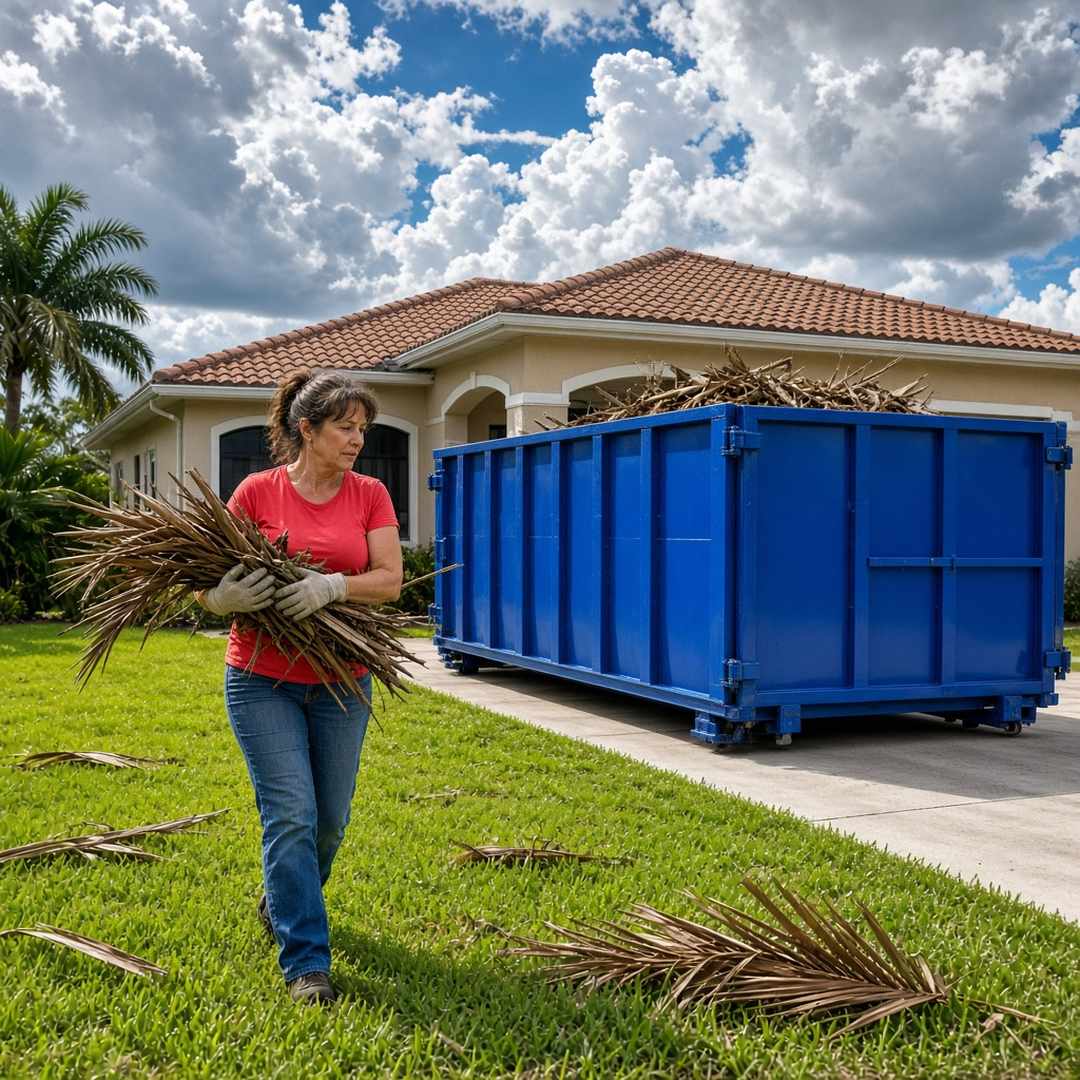
For a few bags of trimmings, curbside or a county drop-off site works. For real storm debris, a roll-off on your property is the better tool. It holds a large volume in one place, so you are not making repeated trips with a loaded truck, and it keeps the debris off the road while you work through the cleanup. After a major storm, drop-off sites and transfer stations run at capacity and roads stay blocked, so a container that comes to you removes two bottlenecks at once.
Size and Timing
Storm debris is bulky and light, so a 30 or 40-yard box fits better than the weight alone suggests — it fills on volume. For a smaller yard or a single downed tree, a 20-yard can be enough. On timing, demand spikes across the whole region at once after a storm, so arranging a container early in the cleanup improves the odds of a prompt drop. The yard waste and storm debris page covers the service in more detail, and the dumpster sizes guide helps you gauge the box.
To line up a container for a storm cleanup, call (239) 880-1643 and describe the damage — a local provider will size and schedule the roll-off.
Frequently asked
Frequently Asked Questions
What size dumpster is best for hurricane debris in Estero?
A 30 or 40-yard dumpster fits most hurricane cleanups, because storm debris is bulky and light and fills a container on volume well before weight. Branches, fronds, and damaged fencing take up far more room than they weigh, so a larger box clears more per haul. A smaller yard or a single downed tree may only need a 20-yard. Describe the extent of the damage and a provider sizes the container to it.
How do I sort storm debris for disposal in Estero?
Sort storm debris into three streams as you load: vegetative material like branches and fronds, construction and demolition material from structural damage, and appliances or household items. Lee County processes these separately — yard waste becomes compost and mulch, while C&D goes to the Class III landfill. Keeping them unmixed avoids a contamination charge and lets a provider route each stream to the correct facility. Do not combine them with household trash.
Is a roll-off better than hauling storm debris myself?
A roll-off is the better choice for real storm debris because it holds a large volume in one place and stays on your property while you work. Hauling it yourself means repeated loaded trips to sites that run at capacity after a storm, over blocked roads. A container removes both the trip count and the road problem. For a small amount of trimmings, a county drop-off still works fine.
When should I book a dumpster after a storm?
Book as early in the cleanup as you can, because demand surges across the whole region at the same time after a major storm. After Hurricane Ian, cleanup stretched over months and disposal capacity was stretched thin, so early arrangements fared better. Reserving a container before you start clearing improves the odds of a prompt drop-off. Call to check current availability and hold a box for your property.
Call Now for Dumpster Rental in Estero
Reach a local roll-off provider serving Estero and Lee County, FL.